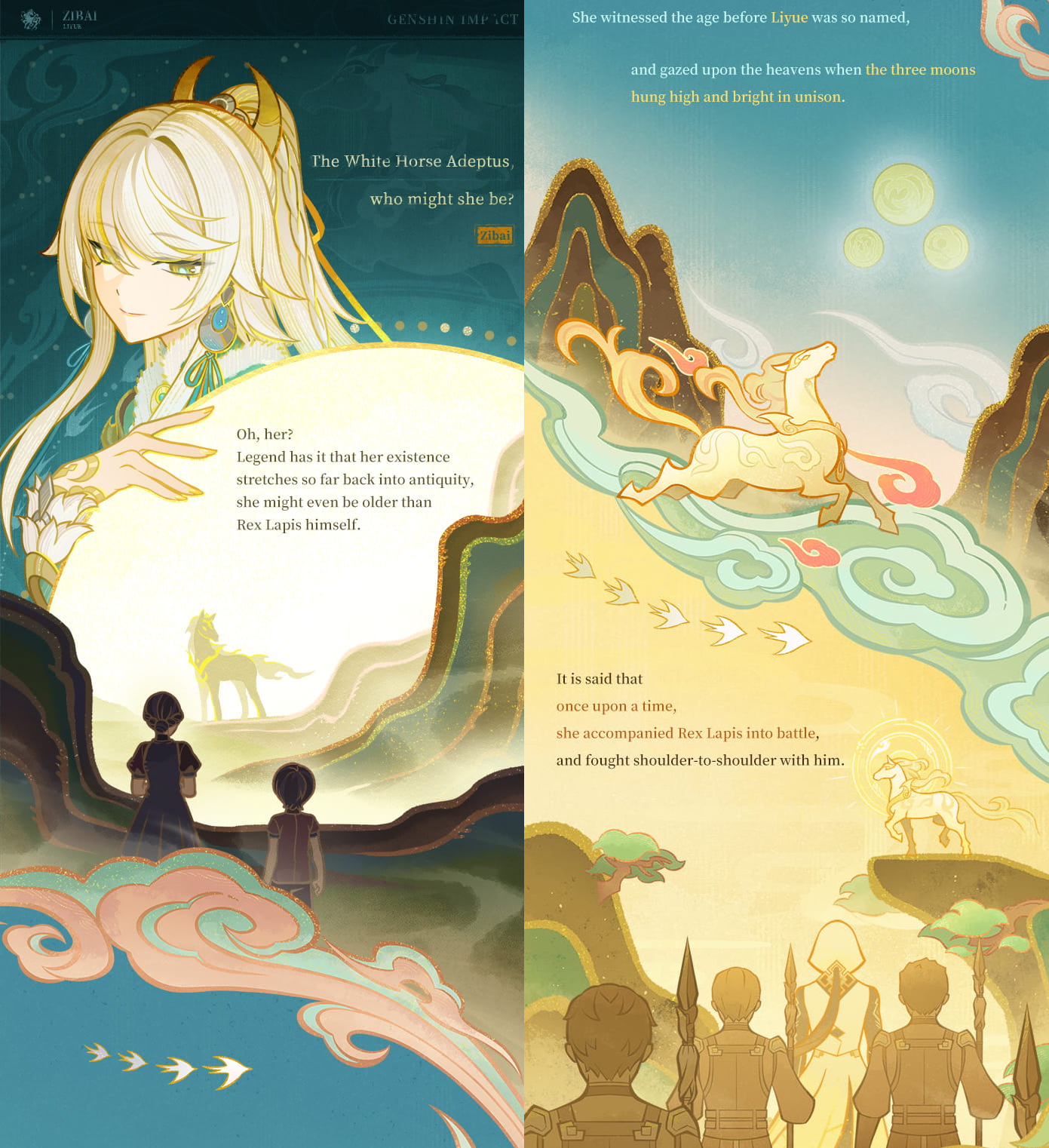



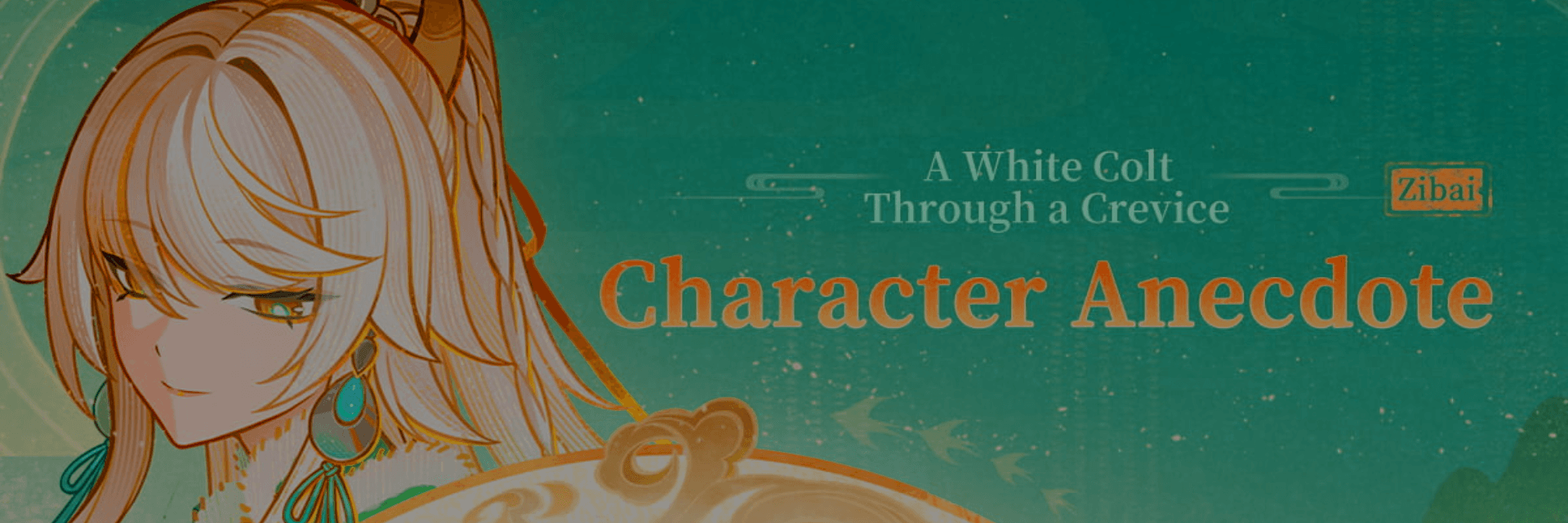
HoYoverse ha publicado una evocadora anécdota de personaje titulada Un potro blanco a través de una grieta que se centra en Zibai, la legendaria Adeptus Caballo Blanco, cuya historia se ha susurrado en los mitos y cuentos populares de Liyue. La anécdota habla de la difusa mezcla de verdad y ficción que rodea a esta figura, sugiriendo que lo que los viajeros han oído hasta ahora solo podría formar una «imagen borrosa» de su verdadera naturaleza. Mientras los farolillos iluminan la noche una vez más, los jugadores se preguntan si esta Adeptus, antes esquiva, finalmente se revelará en su tierra natal, trayendo siglos de leyenda al reino de la memoria viva.
El propio título, Un potro blanco a través de una grieta, deriva de un modismo chino que significa que el tiempo pasa rápidamente, una metáfora adecuada para un ser ligado a épocas antiguas y apariciones fugaces. En las tradiciones orales de Liyue, la Adeptus Caballo Blanco a menudo se menciona en términos abstractos, como un estallido de luz o una historia contada a través de recuerdos fragmentados en lugar de historia documentada. Los viajeros que han encontrado referencias a ella en libros, líneas de voz o folclore local pueden recordar que su leyenda difumina el mito y la realidad hasta el punto de que nunca se ha pintado una imagen clara de su verdadera forma.
Según la historia del juego, Zibai se encuentra entre los Ocho Adeptus de Liyue, seres de gran poder que fueron fundamentales para pacificar amenazas como el dios Tao Dou durante la Guerra de los Arcontes. Las historias cuentan que apareció como un corcel blanco como la nieve, ayudando al Arconte Geo a establecer el orden en el reino mortal. Algunos relatos incluso describen sus ojos ambarinos como capaces de mirar a través de los desolados páramos del tiempo mismo, reforzando aún más su asociación tanto con el conocimiento celestial como con la percepción temporal.
Más allá de su apariencia mítica, otras fuentes sugieren una conexión más profunda con el tiempo y los asuntos celestiales. A Zibai a veces se la describe como una «hija del tiempo» y se la vincula con la enigmática figura de Istaroth, conocida como la Soberana del Tiempo. Una cita atribuida a Istaroth en el marketing de avance de Zibai reflexiona sobre la naturaleza fugaz de la vida y la leyenda, preguntando por qué eligió su camino a pesar de la tendencia del mundo a olvidar incluso a los seres más grandes. Esta insinuación sobre su naturaleza contemplativa sugiere que la historia de Zibai no trata solo de poder, sino de las elecciones que definen el propio legado.
La naturaleza enigmática de los relatos de Zibai encaja bien con la estructura poética de la anécdota. Los viajeros que escuchen a los narradores locales hablar de ella pueden encontrar múltiples versiones de la misma leyenda: algunos dicen que permaneció en la luna, escuchando los deseos de los mortales mientras vigilaba las parpadeantes luces de Teyvat desde abajo. Otros afirman que desapareció en reclusión después de la Guerra de los Arcontes, retirándose a bosques lejanos o valles montañosos, solo siendo avistada por raros viajeros que la encuentran en lugares remotos.
Estas narrativas diversas refuerzan la sensación de que Zibai existe en el límite de la memoria y el mito. Ella encarna un tema familiar para muchos jugadores de Genshin Impact: la tensión entre la historia registrada y la experiencia vivida, entre lo que está escrito en los pergaminos y lo que persiste en la narración oral. Su historia se entrelaza con el tapiz más amplio de la tradición de los Adeptus, que a su vez une la antigua intervención divina con la lucha del mundo mortal por preservar el conocimiento a través de las generaciones.
A medida que el festival del Rito de la Linterna y las tramas en curso continúan explorando motivos lunares y ecos míticos, las referencias a la leyenda de Zibai se sienten cada vez más relevantes. La invitación de la anécdota —a preguntarse si se revelará cuando los farolillos iluminen el cielo nocturno de nuevo— apunta hacia próximos desarrollos narrativos en la Versión Luna IV y más allá. Ya sea a través de misiones de mundo, misiones de historia de personajes o exploraciones de lore oculto, los viajeros pronto podrán obtener una visión más clara de quién es realmente la Adeptus Caballo Blanco y cómo su presencia da forma a la historia oculta del mundo.